
Fields in Ogemaw Tax Records
Valuation and billing are separate jobs. Assessors set parcel values and classifications under Michigan law, while County Equalization studies sales and appraisals across Ogemaw County's 14 townships and two cities. The Treasurer handles collection and delinquency.
| Field | What It Shows | Where |
|---|---|---|
| Assessed value | Michigan value generally set at 50% of true cash value | Local assessor record |
| SEV | Value after equalization | Assessment roll |
| Taxable value | Capped tax base that may uncap after transfer | Assessment and tax record |
| PRE or exemptions | Flags that may change tax liability | Assessor and state rules |
| Bill and status | Levies, payments, balance, delinquency | Treasurer and BS&A |
True cash value is the usual selling price. State guidance sets that standard, not any forced-sale or auction figure for the parcel. A purchase price is a useful event marker, but the assessor does not have to adopt it as true cash value.
Ogemaw BS&A Tax Modes
The county property-tax page points to BS&A. Ogemaw County offers three modes there: Assessing, Current Tax, and Delinquent Tax. Searching works by Address, Name, or Parcel Number. The county publishes no public view of the detailed subform or a filled-in parcel card, so field lists and coverage years beyond the visible modes stay unconfirmed.
| Visible search | Use | Record family |
|---|---|---|
| Address | Find the tax parcel | Assessing or tax |
| Name | Find likely taxpayer entries | Dated roll |
| Parcel Number | Match one parcel | All visible modes |
The manifest image confirms the official routing page.
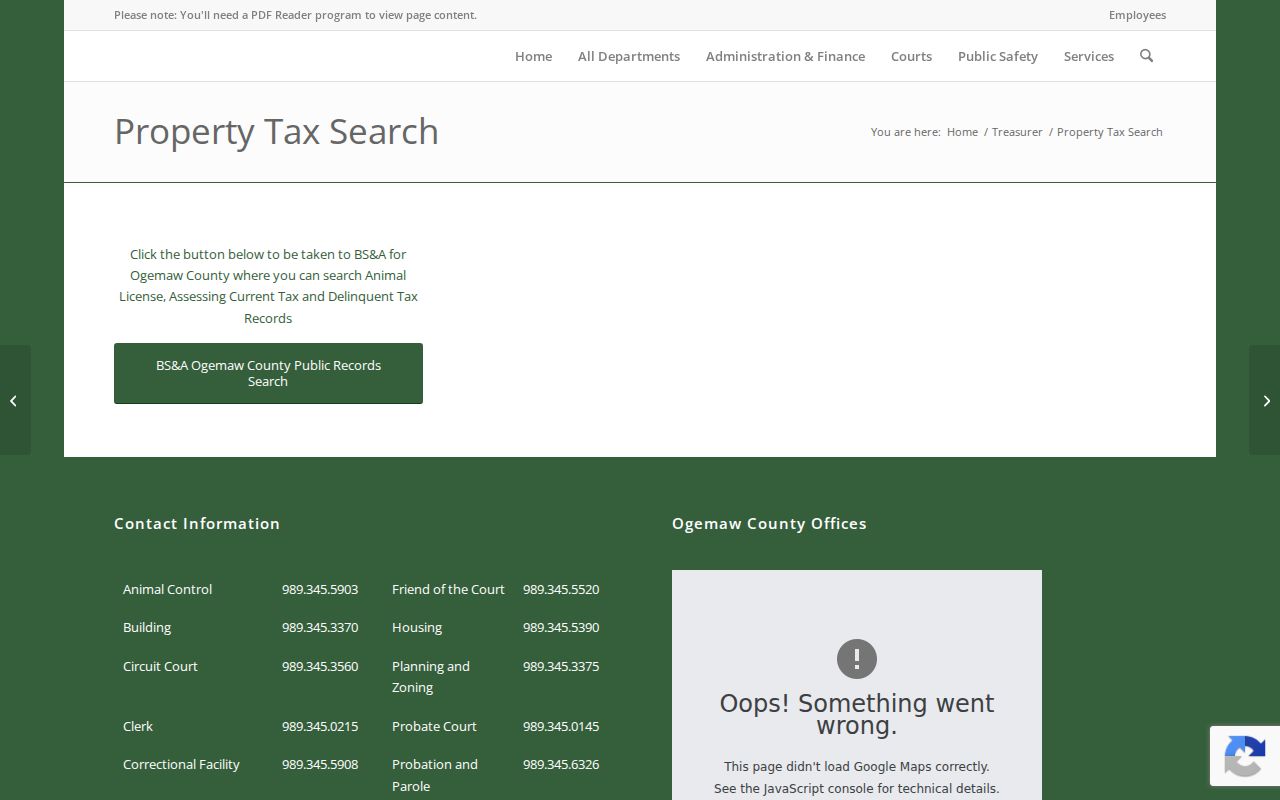
The capture directs the search but does not establish a parcel's current balance.
Ogemaw Equalization Studies
County Equalization studies sales and appraisals every year. Every property class gets studied. Its scope spans 14 townships and two cities, and it backs local assessors on discovery, listing, valuation, and description accuracy. Ogemaw County posts reports from 2018 through 2023 on its county reports page, and the Equalization office page defines that role.
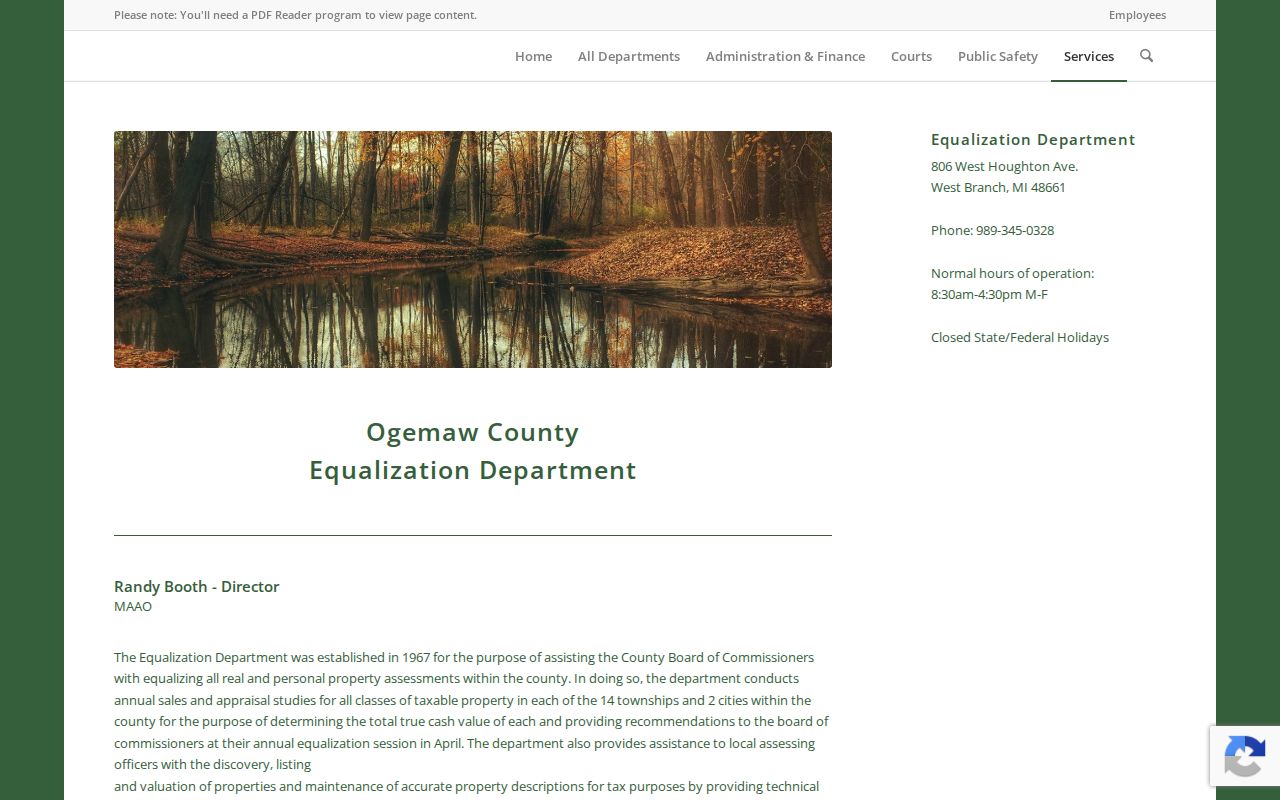
The county study is context for local rolls, not a bill for one address.
Ogemaw PRE Tax Relief
Michigan's principal residence exemption can remove up to 18 mills of local school operating tax. It applies to an eligible owner-occupied principal residence. State guidance generally sets Form 2368 deadlines at June 1 for summer tax and November 1 for winter tax. Rescission generally comes due within 90 days. Eligibility must be tested under current state rules. The Michigan PRE page supplies the state framework, while the county taxpayer-forms page provides local forms.
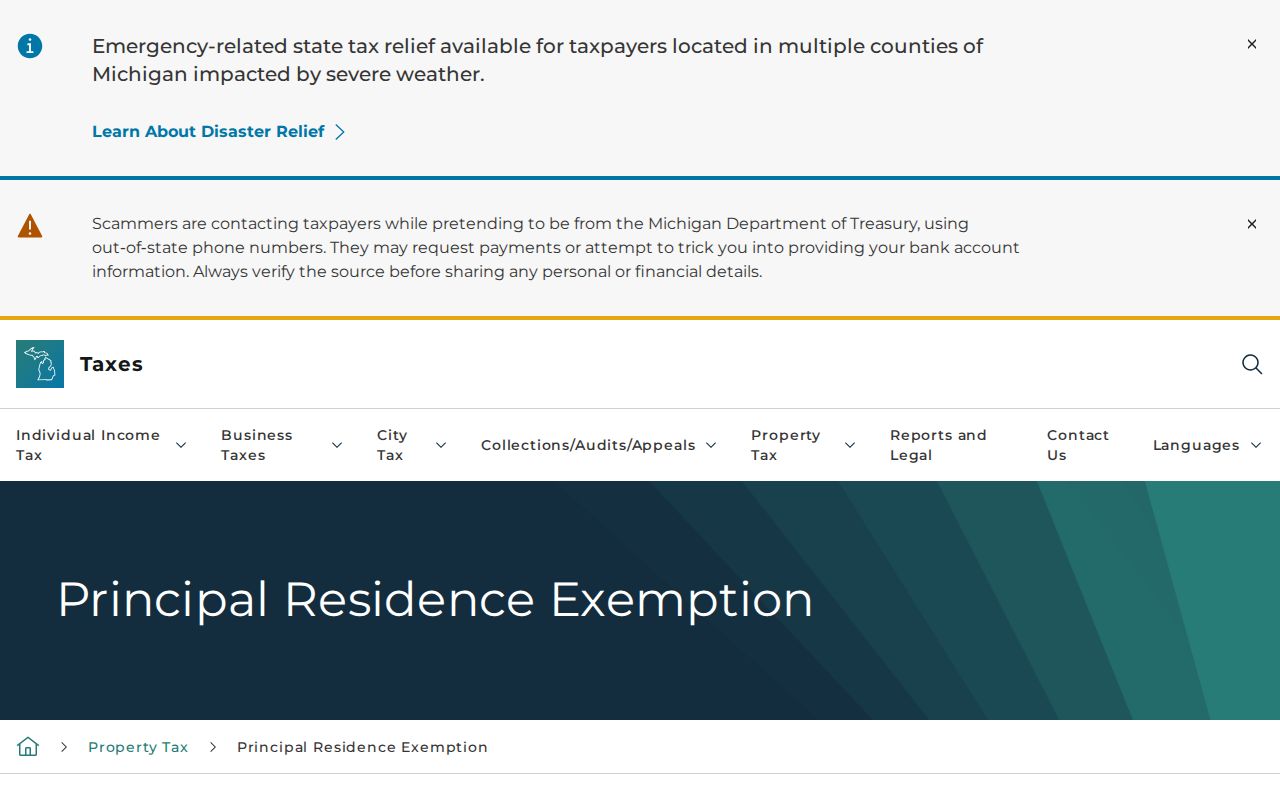
The state capture explains the school-operating exemption rather than promising approval for a parcel.
Look Up an Ogemaw Tax Bill
Start on the official Ogemaw County route. Pick Current Tax or Delinquent Tax. Search by address or parcel number. Then log the tax year, retrieval date, taxing unit, amount, payment status, and any stated interest or fee as separate facts, because balances change and a dated PDF or old screenshot is not current proof.
- Search BS&A by address or parcel number.
- Choose the current or delinquent record family.
- Record tax year, levies, payments, and balance.
- Compare assessed, SEV, taxable, and exemption fields.
- Confirm any foreclosure or sale lead with the current Treasurer notice.
- Assessed value
- The assessor's value, generally half of true cash value in Michigan.
- Mill or levy
- A rate used to calculate a tax charge.
- Principal residence exemption
- Qualified relief from certain school operating mills.
- Tax lien
- A legal claim tied to unpaid tax, distinct from a mere old balance screen.
Ogemaw Delinquency Records
The Treasurer page gathers delinquent-tax payment and tax-sale information. It also holds foreclosure material, land-bank records, and unclaimed property in one place. Some documents there are historical. A settlement PDF calculated a combined delinquent roll in 2024. A show-cause notice covered unpaid 2019 and earlier taxes, with 2021 and 2022 process dates. Both are dated snapshots of Ogemaw County collections. The posted hardship form is date-specific too. It describes a one-year extension, not a reduction, and interest and fees continue. A tax database does not establish every deed, mortgage, probate event, or easement affecting title. So use the current form and confirm present status with the Treasurer.
Ogemaw Transfer Tax Changes
A transfer can uncap taxable value. In Michigan, a property transfer resets taxable value to state equalized value, so the new Ogemaw County tax record may differ sharply from the prior owner's record. Keep the deed date, assessment year, assessed value, SEV, taxable value, classification, and exemption flags in separate columns. A recorded consideration amount binds no one. The assessor does not have to adopt that sale price as true cash value. County forms include the Property Transfer Affidavit, PRE affidavit and rescission, summer deferment, disabled-veteran exemption, hardship material, and foreclosure-proceeds forms. Filing is only one event. The updated roll proves the effect.
Keep an Ogemaw County Tax-Year Ledger
Give each year its own row. A reliable Ogemaw County property tax ledger records the local unit, parcel number, property address, assessment year, assessed value, SEV, taxable value, PRE or exemption flag, current charge, payment date, and balance. Add a retrieval date too. Interest, fees, and delinquency status can change after the screen is saved. Label the source family as well. Assessing covers valuation and classification, while Current Tax covers the active bill and Delinquent Tax covers an unpaid prior obligation. FetchGIS can combine map and property-card fields. That convenience does not erase the field dates. Nor should a mailing address be treated as the parcel location. Kept this way, the ledger stops a prior-year assessment from being paired with a present balance.
Source check. A zero or paid balance answers a billing question; it does not prove that no mortgage, deed restriction, or other recorded interest exists.
Ogemaw PRE Forms Have Two Review Dates
Michigan's current Principal Residence Exemption guidance ties Form 2368 to June 1. It also names November 1 as a review point. The form is a claim route. It is not proof the exemption was granted. Save the signed filing, assessor response, and Board of Review action as separate records. Keep the later roll entry too. Rescission generally comes due within 90 days after eligibility ends. The state claim-requirements page shows the timing and review framework.
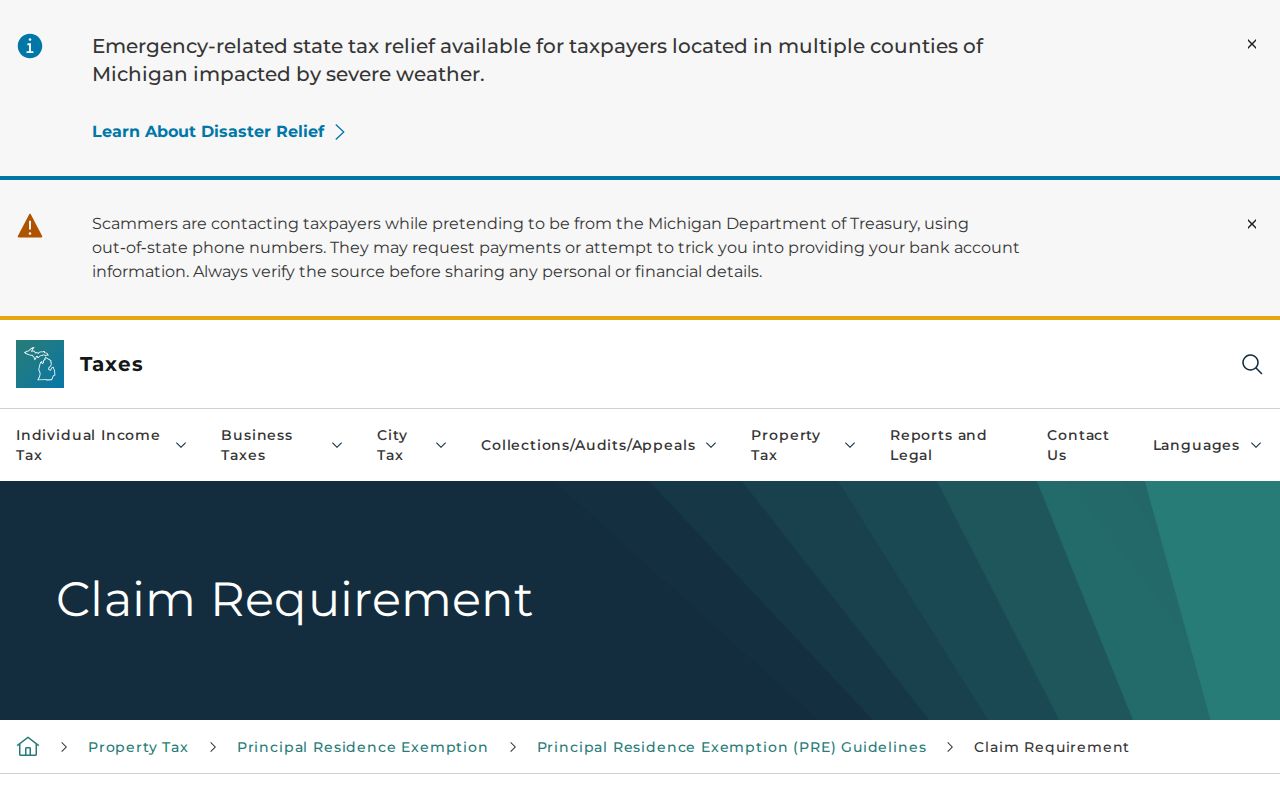
The state guidance page is useful for deadline context. The local assessor's dated decision still controls the parcel's actual exemption record.
Ogemaw Foreclosure Records Need a Status Chain
A tax foreclosure in Ogemaw County is not one event. Delinquency, forfeiture, judicial foreclosure, sale, redemption, and a recorded deed are separate stages. A Treasurer result showing an unpaid year proves only that. It does not prove the foreclosure finished. An old notice says nothing about present title either. To see the real picture, build a chain. The chain should include the current Treasurer result, the dated notice, any court event, and the sale record. Add the redemption period and the later instrument recorded with the Register of Deeds.
Dates drive everything here. One historical show-cause notice from the county covers unpaid amounts from 2019 and earlier. It listed forfeiture on March 1, 2021. It showed a show-cause event on January 19, 2022. It also showed a February 9 judicial hearing and a March 31 redemption date under docket 21-651817. Those dates describe one past cycle. They are not current deadlines. Nor can they show that a listed address actually changed hands.
Mortgage foreclosure runs through a different county route. The Sheriff's sale guidance covers Thursday sales at 10 a.m. in the courthouse lobby when open. It also covers newspaper publication, posted adjournments, and certified funds. The sale is as-is, with no county survey and no title insurance. A winning bid is still not the final title step. The deed must come back through the lender's attorney and then be recorded.
For every event, write down the source's own status words. Keep the parcel ID and the legal description. Treat an address marked "not guaranteed" as a lead only. Check balances and sale details on the live Treasurer route. That way an old docket, a land-bank minute, or a stale sale notice never gets mistaken for a current tax or ownership conclusion. Old records stay old, and current status lives in current sources.
Appeal an Ogemaw Assessment
Appeals begin with the city or township assessor and the local Board of Review. Gather the right records first. That means the assessment notice, the parcel description, classification, photographs, repair facts, and well-matched sales. Write down the decision date, the notice date, and the filing deadline. Note the form and the current status too.
Each dispute type has its own path. Assessment, classification, PRE, and Treasury decisions do not share one deadline. Michigan Tax Tribunal guidance generally sets 35-day windows for specified appeals, but the exact route depends on which decision you received. Always verify the current notice and the official instructions before filing.
Appeal window. Use the deadline printed on the current local or state decision. A past county form cannot establish today's filing date.